
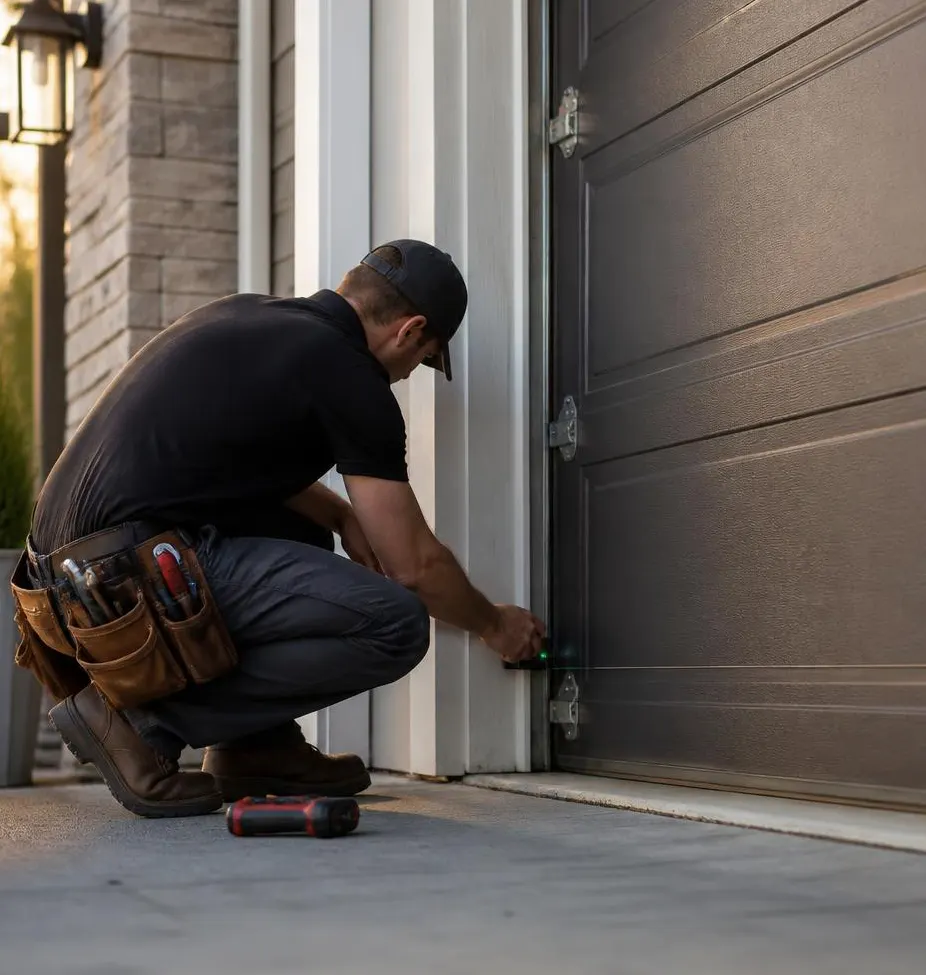
Here's the argument that plays out in a lot of Palm Coast garages: one spouse says "we don't need an insulated door, we're not trying to keep heat in like people up north." It's a tempting line because it sounds logical — R-value got famous as a winter concept, something for houses in places with snow. If you grew up thinking insulation means "keeping the warm air inside," skipping it in Florida feels like common sense and an easy way to save a few hundred dollars.
The problem is that insulation doesn't only work one direction. It resists heat flow, period — in or out. In a Florida summer, your garage door spends hours absorbing direct sun and radiant heat, and an uninsulated steel door will happily pass most of that heat straight through to the air inside the garage, and from there into any room that shares a wall with it. The R-value argument in Florida isn't about comfort in winter. It's about heat gain in summer, and that's a real, measurable thing.
What R-value actually measures
R-value is a rating of how well a material resists heat transfer. A hollow single-layer steel door might carry little to no insulation value. A door with a polystyrene or polyurethane core sandwiched between steel skins will carry a meaningfully higher R-value, and polyurethane-filled doors also tend to be stiffer and quieter than foam-board versions at a similar thickness.
Higher R-value doesn't make your garage cold. It slows down how fast heat moves through the door panel, which means your garage stays closer to shaded-outdoor-temperature instead of baking like a closed car.
Who actually benefits
- Attached garages that share a wall with living space. If a bedroom, laundry room, or office sits on the other side of the garage wall, a hot garage pushes heat into that room all afternoon. Insulation cuts that transfer noticeably.
- Anyone using the garage as a workshop, home gym, or extra room. If people actually spend time in there, afternoon heat (plus our humidity) makes an uninsulated garage close to unusable for several months. This is the group where insulation pays for itself in comfort alone.
- West- or south-facing doors with direct afternoon sun. Orientation matters more than people expect. A door that bakes in direct sun from noon on will run hotter than one that's shaded by trees or the house itself.
- Anyone fighting condensation or rust. Coastal humidity and salt air cause moisture to collect on cold metal surfaces, especially where temperature swings are sharp. An insulated door's inner layer tends to run closer to room temperature, which reduces condensation on the inside skin — a real factor if you store tools, electronics, or a car with exposed metal parts.
- Hurricane-season durability. A sandwiched insulated panel is stiffer than a hollow one. That extra rigidity helps the door perform better under wind load, and dents less from flying debris, which matters anywhere wind-rated doors are the standard.
Who's paying for nothing
- Detached garages used purely for storage. If nobody spends time out there and it doesn't share a wall with the house, the heat-transfer argument mostly disappears.
- Fully shaded doors. If trees or the home's orientation keep direct sun off the door most of the day, the heat load insulation is fighting is already much smaller.
- Households planning to sell soon who won't use the garage differently. Insulated doors do add resale appeal, but if budget is tight and the space will stay a plain storage bay, it's a lower-priority upgrade compared to a working opener or sound springs.
The trade-offs nobody mentions in the showroom
Insulated doors weigh more than hollow single-layer doors. That extra weight changes the math on springs and openers — a door installed with the wrong spring tension for its actual weight will wear out faster, sag, or struggle to open smoothly. If you're upgrading from a non-insulated door to an insulated one, the springs and opener should be rechecked, not just reused. Insulated panels also cost more up front (national ranges for insulated steel doors typically run noticeably higher per door than basic uninsulated panels, before installation). And insulation reduces heat transfer — it doesn't stop humidity or replace proper garage ventilation. If moisture and musty air are the real complaint, a vent or dehumidifier solves a different problem than the door does.
When to call Palm Coast Garage Door Experts
If you're weighing an insulated upgrade, the honest answer depends on your garage's orientation, what's on the other side of that shared wall, and how the door is actually used — not just the R-value number on a brochure. We walk homeowners through that trade-off as part of every Garage Door Installation & Replacement estimate, and we size springs and openers to match the actual door weight so nothing gets installed undersized. If you're sticking with your current door but noticing rust streaks, condensation, or a door that's started sagging or struggling to lift, that's worth a look too — often it's a Garage Door Maintenance & Tune-Up issue rather than a sign you need a whole new door.
Settle the argument with real numbers for your garage, not a guess. Call Palm Coast Garage Door Experts and we'll tell you straight whether an insulated door is worth it for your home in Palm Coast, FL.