
On a typical service call, a technician in this area finds the same thing: a homeowner sprayed WD-40 on a squealing door six months ago, the noise came back worse, and now the rollers are gummed up with dust and grit. Or the opposite problem shows up — a door that's never been touched since installation, with rust forming on the spring coils and hinges from salt air and humidity doing their slow work. Both situations are preventable with the right lubricant and a ten-minute routine done a few times a year.
Tools and Supplies You'll Need
- A silicone-based or lithium-based garage door lubricant (not a multipurpose spray)
- A clean, lint-free rag
- A soft brush or old toothbrush for cleaning tracks
- Step ladder
- Work gloves
- Flashlight (for checking tight spots around hinges and the torsion spring)
Step-by-Step: How to Lubricate a Garage Door
- Disconnect the opener and close the door manually. Pull the release cord so you can move the door by hand without the motor engaging. This keeps fingers and the drive system safe while you work.
- Wipe down the tracks first — don't lubricate them. Use a rag to remove dust, pollen, and the gritty film that builds up fast in this climate from afternoon humidity and blowing sand near the coast. Tracks should stay clean and dry, never oiled.
- Lubricate the hinges. Apply a small amount of silicone or lithium spray directly to each hinge pivot point, then open and close the door a few times to work it in.
- Lubricate the rollers. Spray the bearings at the center of each roller, not the wheel surface itself. If the rollers are plastic with sealed bearings, a light coat is still worth doing twice a year.
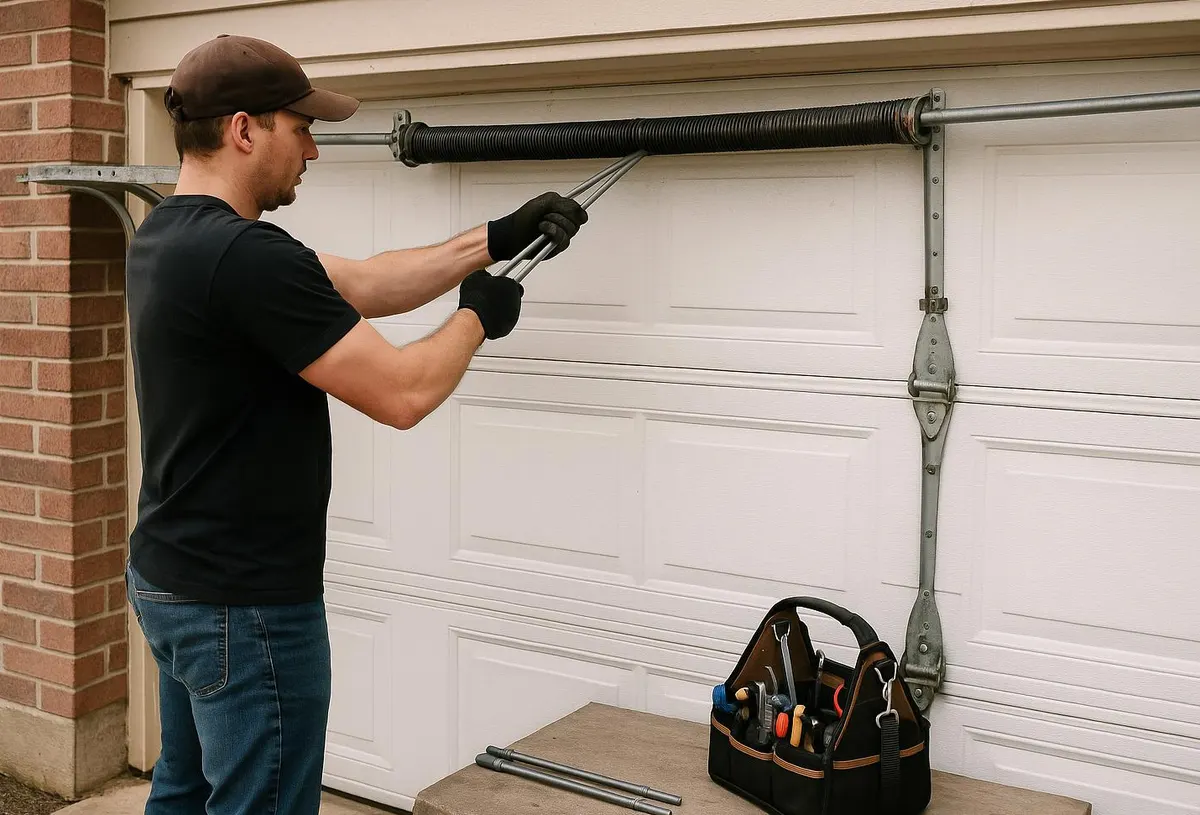
- Coat the torsion spring lightly. Run a thin line of lubricant along the spring coils while the door is closed. This is one of the most important steps in a humid, salt-air environment, since bare spring steel rusts and weakens faster here than inland.
- Apply lubricant to the lock mechanism and the arm bar, if your door has one. A dry lock is a common reason manual locks seize up after storm season.
- Run the door up and down two or three times. This spreads the lubricant evenly and lets you listen for any grinding or catching that wasn't there before.
- Reconnect the opener and test automatic operation once everything is wiped down and excess lubricant removed.
Products to Use — and What to Avoid
Silicone-based and lithium-based sprays made specifically for garage doors are the right call. They resist washing out in humidity and don't attract dust the way heavier products do.
Avoid WD-40 and similar household sprays as a long-term lubricant. WD-40 is a solvent and light cleaner, not a lubricant — it breaks down quickly and leaves parts drier than before within a few weeks. Also skip grease, motor oil, and petroleum-based products on rollers and tracks; they attract grit, gum up moving parts, and are especially bad news during the sandy, humid stretches typical of this area, where dust sticks to anything oily.
What a Homeowner Can Do vs. What Needs a Technician
Lubricating hinges, rollers, locks, and the spring coils is safe, routine homeowner maintenance. What's not: adjusting spring tension, replacing a spring, or working on anything load-bearing under tension. A torsion spring holds enough stored energy to cause serious injury if it's mishandled, and that work should always go to a trained technician.
If you notice rust pitting on the spring itself, a roller that's cracked or bent, or a track that's visibly warped from storm impact or chronic moisture exposure, that's also past the point of a lubrication fix.
When to Call Palm Coast Garage Door Experts
If lubrication doesn't quiet the noise, if the door feels heavier to lift than it used to, or if you spot rust that's gone past surface level, it's time for a professional look. Our team handles Garage Door Maintenance & Tune-Up visits that cover a full inspection of springs, cables, and hardware, and we also handle Garage Door Spring Repair when a coil has corroded or lost tension. We'll tell you straight whether a part needs replacing or whether routine upkeep will get you through another storm season.
If your garage door needs more than a bottle of lubricant, call Palm Coast Garage Door Experts. We serve homeowners throughout Palm Coast, Flagler Beach, Bunnell, Ormond Beach, Daytona Beach, St. Augustine, Port Orange, and DeLand, and we're ready to help.